

Exposing Our Undies (In the Name of Sustainability)
Updated: Aug 21
This is an archived edition of Island Life. Island Life is the bi-monthly newsletter and whimsical musings from the team at Nikoi and Cempedak Islands. You can subscribe to it here.

A Note From Kenya
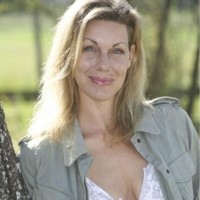
For the first time since I started writing this newsletter almost five years ago, I’m handing it over to someone else. As some of you may have seen on Instagram, I’m currently in the Maasai Mara in Kenya, taking part in a staff exchange with Cottar’s Safaris, where I’m acting as temporary CEO. In my place, the excellent Louise Cottar has come out to the islands and is running things for the month of April.
Since we joined The Long Run back in 2013, I’ve encouraged our team to go on staff exchanges with like-minded properties around the world. After seeing how valuable these have been, Louise and I thought it was about time we did one ourselves.
Before I left, I explained in my handover to Louise that writing this newsletter is one of the essential (and more enjoyable!) parts of the job. So without further ado… over to Louise.
Andrew Dixon
Temporary CEO
Cottar's Safaris

With love from Kenya!
“Exposing Our Undies”
On one of our first calls when preparing for this exchange, we joked that in an industry filled with greenwashing, this would be the moment we “expose our undies.” Sustainability, at its most useful, asks us to reveal the parts of our businesses we usually keep hidden. So, this experience has been an honest look at guest offerings, sustainability pressures and commercial realities.
So far, I’ve seen some clear parallels begin to emerge in the external pressures nature-based businesses like ours unfortunately face. In East Bintan, it’s the steady industrial creep in neighbouring areas like Pulau Poto. In my home, it’s overtourism and cattle incursions in the Maasai Mara. These are not issues that sit neatly within the boundaries of our camp or islands. They spill beyond them, and in turn demand catalytic action, thought leadership, convening and integrity beyond our own operations.
As Global Ecosphere Retreats under The Long Run, both Cottar’s Safaris and Nikoi and Cempedak Islands are, in our own ways, not afraid to show our undies. And that’s a good thing. A well-run business isn’t spotless, it’s well understood. Not all of our under-layers are flaws; some are the structure that makes us what we are. Trust grows when you open up the workings, and remain on a journey of continuous improvement, not when you smooth them over.

Diving Straight Into Conservation Matters
My first impression of the islands was that it is clear that guests come to Nikoi and Cempedak to step away from the busyness of city life and into something more elemental. It appears to be an experience that sits somewhere between Robinson Crusoe and the exploratory spirit of Jacques Cousteau, with a refined sense of island comfort woven through it.
Last week, this felt particularly evident when I had the privilege of meeting Indonesia’s modern-day equivalents of Jacques Cousteau: the team’s marine specialists Mutia, Amandine and Lilly, alongside renowned visiting experts Nesha Ichida and Mark Erdmann. They arrived with an ambitious goal - not simply to document marine life, but to discover new species. Coming from a big fauna, savannah environment, I thought they were being, frankly, over ambitious, but they came back, after two days of diving, bursting with enthusiasm, with what they believe are the discovery of 10 new species of fish.

Moments like these underscore how guest-stays, nature-based businesses and philanthropic funding can actively contribute to research and protection - in this case helping to justify and sustain the 138,500-hectare Marine Protected Area (MPA) surrounding the islands. The efforts by the team at Nikoi and Cempedak offer a great case study for continued investment in long-term coral health, biodiversity and habitat stability in this part of Indonesia.
For those interested in following updates on the East Bintan MPA and conservation work from the islands, the Ocean Life newsletter is sent every two months, in the months this one doesn’t go out. You can subscribe to it here.
So what have the island ecosystems of Indonesia shown me ahead of my return to Kenya? Perhaps first, a surprising insight into how connected these places are, despite the 8,000 km between them. I hadn’t expected such an overlap of species - both places are home to the critically endangered dugong and hawksbill turtle, as well as animals like blue-spotted rays and green turtles. Secondly, whilst we are often drawn to the charismatic megafauna - be they sharks or elephants - spending time here has made me think more about the smaller, largely unnoticed species that hold things together. My vote goes to a yet-to-be-identified species of coral goby (pictured below), observed by Nesha and Mark last week, providing cleaning and protective benefits to the acropora coral in which it makes its home.
Ultimately, whether in the savannahs of Kenya or the reefs of Indonesia, the future of these ecosystems will depend less on their inherent resilience, and more on our collective behaviour.
Gobiodon cf histrio in situ and ex situ - both samples collected by Nesha Ichida.
The ‘cf’ means the specimen looks very similar to a known species (in this case Gobiodon histrio), but the identification is not fully confirmed. Photo: Mark Erdmann
Why Purposeful Activity and Stillness Both Matter (And What Comes Next)
In a world that rarely slows down, my first impressions of the experience on Nikoi and Cempedak was the balance between purposeful activities and intentional stillness. There’s plenty to do - snorkelling, nature walks, time with the kids’ club, workshops with artists - but it never feels overwhelming.
What resonates however, is what isn’t there. No air conditioning, no TVs, no constant noise. What may initially feel like limitation is, in fact, intention: an invitation to disconnect, tread lightly and rediscover the rare luxury of space, simplicity and presence. It’s a simple mix, but it works and it's reflected in the strong community of returning guests.
After an extended period on the islands, and time spent at other Long Run Global Ecosphere Retreats, I’ve, at Andrew’s request (and with a fair degree of hesitation), shared a few ideas with the team on how the experience might evolve. But many of you know these islands far better than I do, having returned to them time and again, so I’d really value your perspective. In the short survey below are a few ideas for new experiences, and it would be great to hear where you land on them - or if you’d rather we leave things exactly as they are.

Enjoying a sail last week after a long day in the ‘office’.
Reflections - What Does a CEO Exchange Really Feel Like?
The closest analogy I can draw for a CEO exchange is entrusting your child to someone you deeply respect - someone capable, thoughtful and aligned in values - and asking them to nurture, challenge and broaden that child’s horizons. As founders of organisations that are decades old, Andrew and I feel this acutely. Our businesses are very much our ‘children’. Because of that, stepping into this exchange carried with it a real sense of responsibility - both emotional and moral - as we temporarily placed something deeply personal into another’s care.
While decades of proximity bring depth, they can also narrow perspective - the familiar becomes invisible. One of the greatest benefits of this exchange has been the clarity that comes from fresh eyes. I have valued Andrew’s perspective on Cottar’s Safaris, and I hope to have offered the same at Nikoi Island and Cempedak Island, be it through identifying blind spots, affirming what works and providing suggestions on what comes next.
Culturally, the experience has been equally powerful. Leadership, I’ve found, sits at the intersection of universal principles and local nuance. Clarity, consistency and empathy translate across borders; approaches to change, communication and team engagement are far more context-specific. One moment that stayed with me was observing the team at Nikoi and Cempedak close their morning meetings with a simple phrase: “Happy working.” With a team of over 250 people, this small ritual speaks volumes. It reflects a culture that is positive, open and collaborative - something that is never accidental, but carefully built and consistently nurtured.

Sometimes, however, the greatest value is not in new ideas, but in clarity. Both Nikoi and Cempedak have developed a compelling, proven model that fosters a strong and loyal guest base. My role has been as much about affirming that vision as it has been about offering suggestions for incremental evolution. In the same way, I return with a renewed conviction in what we are building at Cottar’s Safaris.
As I leave Indonesia, I return the “child” more open, adaptable and hopefully, enriched. What’s more, I look forward to continuing this exchange at a team level - something Andrew and I have already started talking about.
Sampai jumpa lagi and happy working!
Louise Cottar
Temporary CEO
Nikoi and Cempedak Islands
Comments